Fixing Moisture-Prone Bathroom Walls: A Decorative Wall Panel Problem-Solution Guide
Moisture-prone bathroom walls fail for three predictable reasons: water reaches the substrate, the lining moves as humidity changes, or the specified panel does not meet the fire class the building requires. Silica mineral decorative wall panel model 8804 from Power Dekor Group closes all three gaps with 100% waterproof performance, 0.06% moisture movement in length and width, no deformation after 100°C boiling, and an A2-s1,d0 reaction to fire under EN 13501-1 — while allowing a bathroom renovation to be completed in one day.
This guide is written for the stage where the decision is already made on paper and execution is next: distributors qualifying a long-term range, contractors pricing a wet-area package, and specifiers who must hand fire and hygiene documentation to a client. It covers the failure mechanics, the EU compliance background, the verified performance of model 8804, the installation sequence, and the commercial terms that decide whether the specification can actually be repeated project after project.
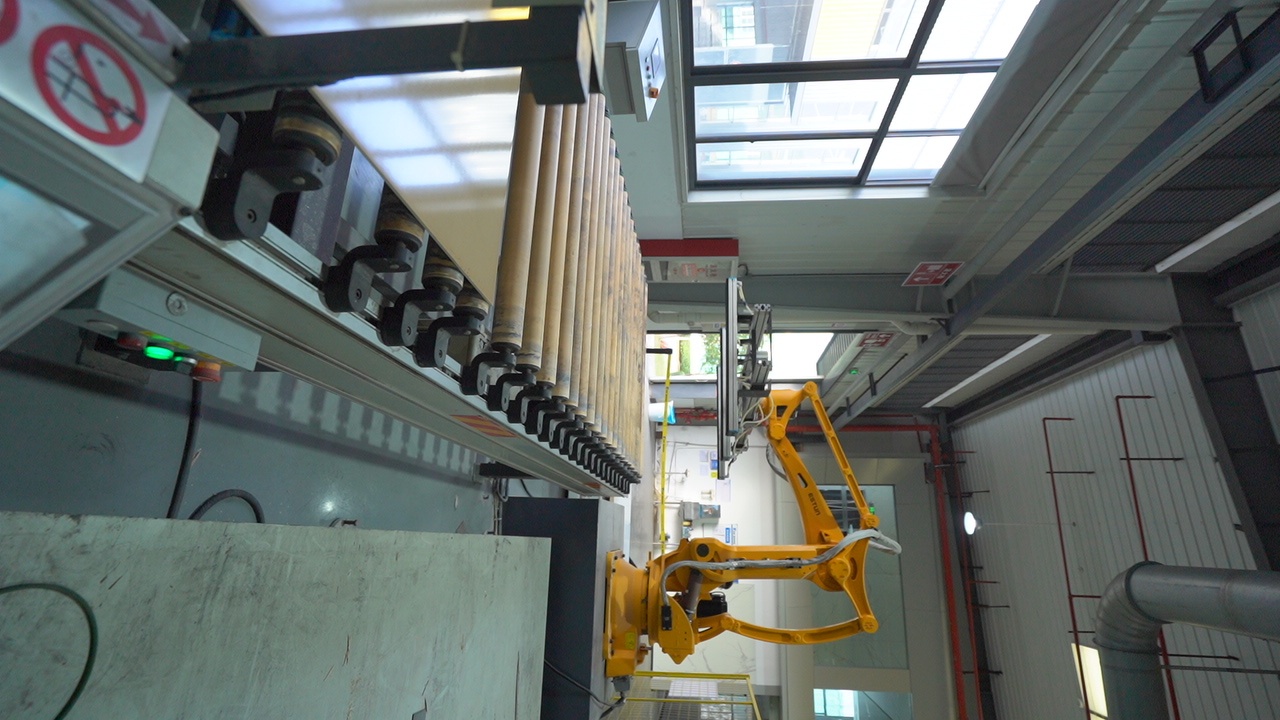
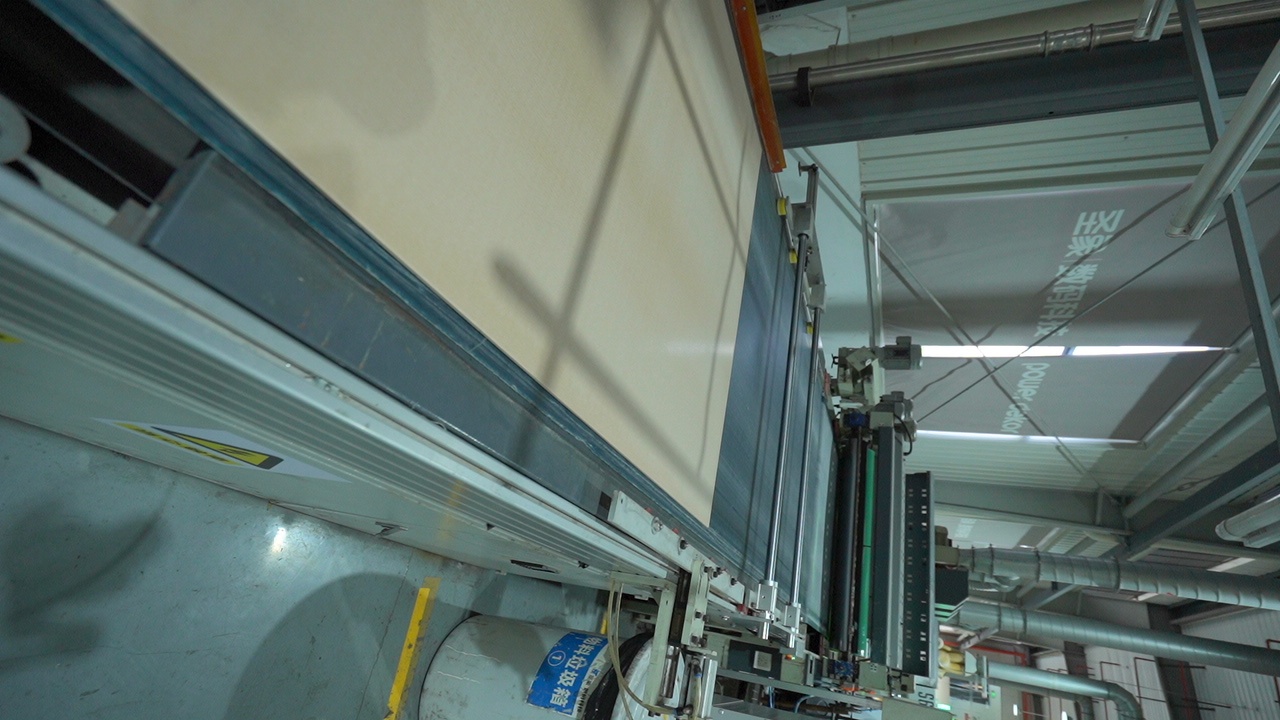
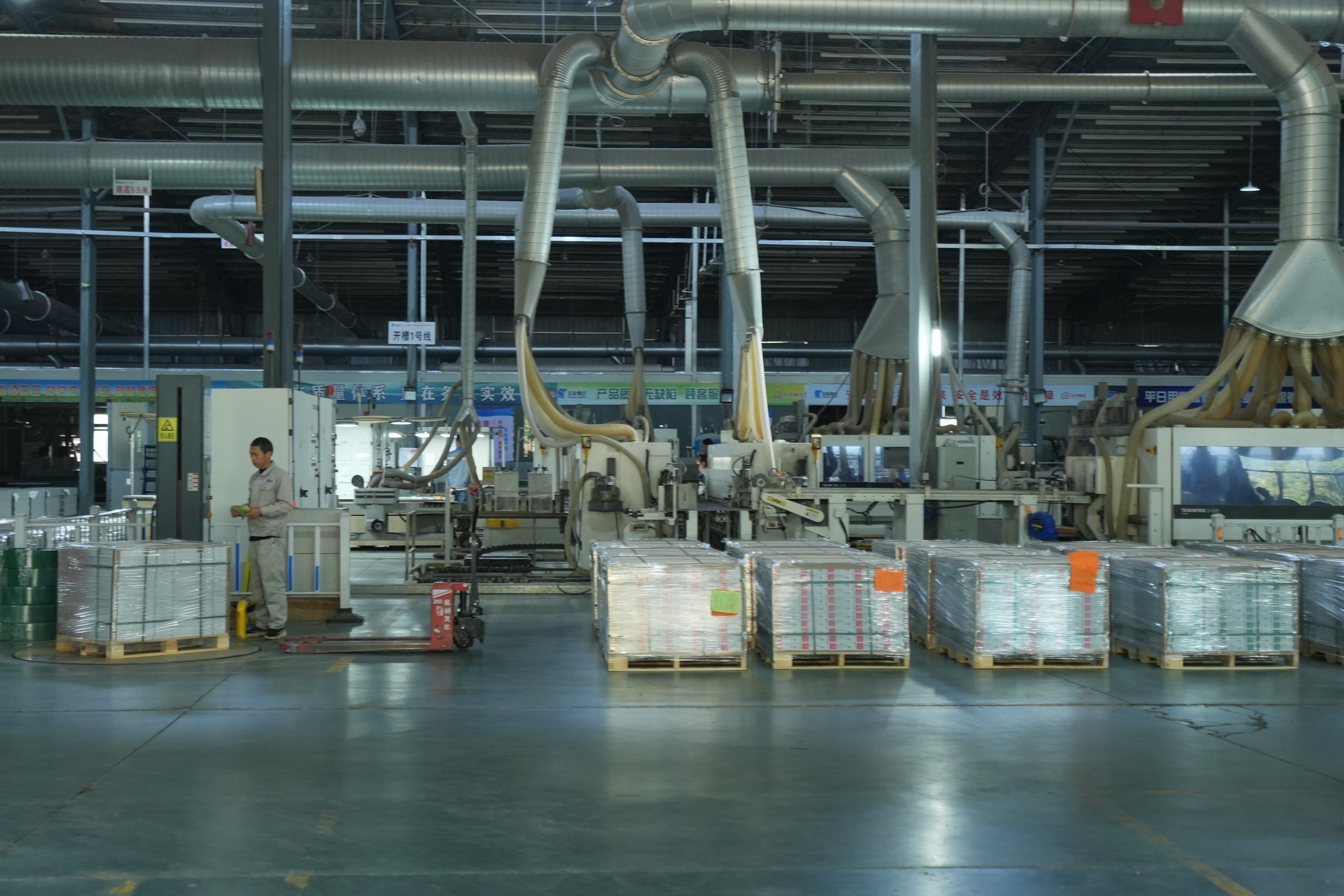
Power Dekor Group is a floor covering and wall panel manufacturer founded in 1995, operating an 870,000 m² factory with an annual production capacity of 88,000,000 m² and supplying mainly the EU and USA markets. Its wall panel range includes SPC decorative wall panel and silica mineral decorative wall panel, both used in interior bathroom and water-exposed applications.
What Makes a Bathroom Wall Moisture-Prone?
Moisture-prone is not the same as wet. A wall can be permanently damp without ever being splashed, and a wall can be splashed daily without failing. Risk comes from water that stays in, or behind, the lining.
Four sources dominate in real bathroom projects:
- Direct splash in shower and basin zones, driven into joints rather than through the panel face.
- Condensation on cold external walls, where warm humid air meets a surface below dew point.
- Cleaning water used daily on the lower wall, which finds unsealed edges and cut ends.
- Trapped vapour behind a lining that lets vapour in but not out, or in front of a substrate that was not dry at installation.
The symptoms follow the same order every time: swollen or lifted edges, dark joint lines, blistering decoration, mould in the sealant, and finally a rework order in an occupied building.
Why a conventional strip-out makes the problem worse
Removing a tiled finish generates dust and waste, requires the substrate to be re-prepared and dried, and takes the bathroom out of service. On a hotel floor or in a rented apartment, downtime is the largest single cost in the renovation — larger than the lining material itself. Any solution that shortens the demolition and drying sequence changes the economics of the project, not only its finish.
The five questions a specifier has to answer
- Is the waterproofing continuous, including joints, corners and cut edges?
- Does the panel move when humidity changes, and by how much?
- Does the panel meet the reaction-to-fire class the building demands?
- Is there test evidence behind the hygiene claim, not only a marketing statement?
- Can the same supplier repeat the specification across a multi-phase programme?
Why Bathroom Wall Panels Are Now a Compliance Decision
In the EU, the reaction-to-fire classification of interior wall linings follows EN 13501-1, which ranks products from A1 (non-combustible) to F. For a bathroom in a hotel, school, hospital or multi-occupancy building, that class is not a preference; it is a condition of the fire strategy for the compartment.
Within the panel category, classes differ by material system. SPC decorative wall panel meets EN 13501-1 Class B, as stated in Power Dekor application data for interior humid and water-exposed projects. Silica mineral decorative wall panel goes further and meets EN 13501-1 Class A2-s1,d0. The difference matters where the lining must contribute little or no fuel load to a corridor or a public wet area.
Market context behind the specification pressure
Decorative panel demand is rising with urban renovation activity. Coherent Market Insights projects the global decorative panels market to reach 39.35 billion USD in 2026. Reed Intelligence reports that Asia Pacific held 43.6% of the global wall panels market in 2025 and is expected to remain the fastest-growing region, while laminate panels stay the largest decorative panel segment at 45.4% of the market in 2026. In the narrower 3D wall panel segment, 360iResearch estimated market size at 815.02 million USD in 2025 with a forecast CAGR of 4.93%.
These figures are not interchangeable. Analysts define decorative panels to include furniture and cabinet laminates, while wall panels cover only the building element, which is why published valuations for the two terms differ substantially. When a specification cites market data, it should cite the definition as well.
The Solution: Silica Mineral Decorative Wall Panel Model 8804
Model 8804 is a silica mineral decorative wall panel: a mineral-based, plastic-free panel for interior walls in humid and water-exposed spaces where a fire classification above Class B is required. Its performance is defined by measured data rather than by category claims.
Verified performance points
- Waterproof performance: 100% waterproof panel body.
- Dimensional stability: 0.06% moisture movement in length and width.
- Boiling resistance: no deformation after 100°C boiling.
- Fire reaction: A2-s1,d0 under EN 13501-1, Class A2 of the EU fire classification for building products.
- Hygiene: ISO 846:2019 Method A antibacterial test shows no growth apparent.
- Material character: no plastic content; the surface reads closer to porcelain than to a polymer sheet.
What each number changes on site
0.06% movement is the figure a specifier needs when setting joint allowance. A lining that grows and shrinks with humidity cycling telegraphs that movement into the sealant lines; a lining that moves by hundredths of a percent keeps joint geometry predictable across seasons and across a building's heating cycle.
No deformation after 100°C boiling is a harsher test than any bathroom will ever apply. Steam, hot cleaning water and repeated wet-dry cycles are the everyday version of the same stress. Passing the boiling test is evidence that the panel will not bow, blister or delaminate in service.
A2-s1,d0 combines three declarations: limited contribution to fire (A2), limited smoke production (s1), and no flaming droplets or particles (d0). For an escape route or a public wet area, the s1 and d0 parts matter as much as the A2 part, because smoke and falling particles are what obstruct evacuation.
ISO 846:2019 Method A with no growth apparent is a test of resistance to fungal and bacterial growth under defined conditions. It supports hygiene positioning in shared bathrooms, gyms and healthcare interiors, and it produces a document a client can actually read, unlike a general antibacterial claim.
Where 8804 stops and SPC starts
Silica mineral is not the automatic answer for every bathroom. Power Dekor selection guidance is direct: for a private home bathroom where price matters more than fire class, SPC decorative wall panel is the appropriate choice; for public spaces with fireproof requirements, where a porcelain-like surface is wanted, silica mineral is the better fit. Both are waterproof; only the silica mineral panel carries the A2-s1,d0 classification.
Surface options: film and digital print
Two decoration routes run across the wall panel range. Film-faced panels are limited by the film width, cost less, and suit buyers with no constraint on design repeats. Digital print panels can carry any design, including a continuous pattern across more than ten panels, and suit projects needing a matched stone or 3D effect across a full wall. Where the joint layout stays visible in a bathroom, the continuous-pattern option removes the repeat problem that film faces create.
One-Day Bathroom Renovation: The Step-by-Step Breakdown
A decorative wall panel renovation differs from tiling in one structural way: the finish is also the lining. Panels are bonded to a prepared existing wall, so there is no demolition of the old finish, no bedding mortar and no curing wait before the room returns to service. For bathroom renovation, SPC and silica mineral wall panels can be completed in one day.
Before installation
- The wall must be flat and sound. Check it with a laser level meter or straight edge and correct hollows before any adhesive is opened.
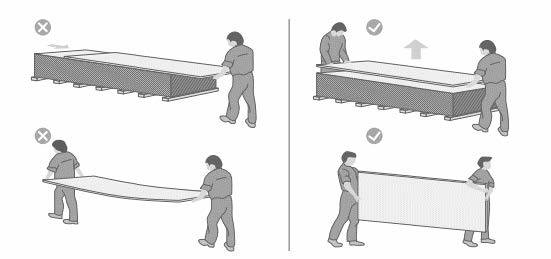
- Panels are fragile at the edges. Carry them on edge and protect corners during handling.
- All cutting and drilling is completed before adhesive is applied.
- In wet areas of a bathroom, metal trims are not used; joints are closed with silicone sealant.
The installation sequence
- Set out the wall. Level with a laser level meter, divide the wall surface into blocks matching panel size, and mark the lines with a pencil. Drawing the full panel layout in advance is recommended, and unglued panels can be pre-fitted in the area to confirm the calculation.
- Cut the edge block. Use a table saw or handsaw with a diamond saw blade to cut the outermost block to size, decorative side facing up. All cutting and drilling is done before adhesive is applied.
- Cut for sockets and switches. Mark the positions on the panel from the actual wall fittings and cut with a diamond grit driller or diamond grit jigsaw.
- Apply structural adhesive. Spread structural adhesive uniformly across the back of the panel using the gluing method, erect the panel aligned to the marked horizontal and vertical lines, and work upwards from the bottom. Check the first panel vertically before continuing.
- Lock the following panels. Continue with the panel locking system, checking the run every four to five panels with the laser level so errors do not accumulate across the wall.
- Press out air pockets. Press across the whole panel face in all directions to achieve full contact between panel and wall.
- Form internal and external corners. Assemble the metal trims to the panel without gluing or nailing, then fit them to the wall before installing the return panel.
- Seal the wet area. In a bathroom, metal trims are not applicable. Seal every joint — panel to ceiling, panel to floor and all internal corners — with silicone sealant to provide the water barrier.
Step eight is the critical detail. A 100% waterproof panel does not by itself make a waterproof wall; the waterproofing is completed by the sealant line. Specification documents should therefore name the sealant requirement, not only the panel model, and site inspection should check the joints before handover.
Where This Specification Fits
Public and commercial bathrooms
Hotels, gyms, student housing and healthcare wet areas combine three requirements that rarely appear together in one panel: Class A2 fire reaction, hygiene evidence and a fast turnaround between occupants. Model 8804 covers all three, and the s1 and d0 declarations support escape-route and corridor applications where smoke production and falling particles are part of the fire strategy.
Single-bathroom residential renovation
For a private apartment or house, the same one-day installation logic applies but the cost balance shifts. SPC decorative wall panel is waterproof and cheaper, and is the recommended option where the building does not require an A2 classification. The renovation decision here is about downtime and maintenance, not about fire class.
Wholesale and distributor programmes
Distributors building a bathroom range need panel types that can share one container. Power Dekor Group limits orders to no more than 4 SKUs per container, with a minimum of 500 m² per SKU and 1x20GP per order, which makes a mixed silica mineral and SPC programme practical without splitting logistics or doubling freight cost.
Delivery references for long-term programmes
Bathroom-focused decorative wall panel supply has been delivered into Spain and Germany, including a German bathroom programme documented at 100,000 m² per year. These references matter less as badges than as proof of repeatability: the same specification, documentation set and packing standard has already passed through EU site conditions, which is what a distributor needs before committing a range to a single panel type.
Silica Mineral 8804, SPC and Ceramic Tile: Selection Table
| Criterion | Silica mineral 8804 | SPC decorative wall panel | Ceramic tile |
|---|---|---|---|
| Reaction to fire (EN 13501-1) | A2-s1,d0 | Class B | Not a panel category; classify the full build-up separately |
| Water behaviour | 100% waterproof; 0.06% moisture movement; no deformation after 100°C boiling | Waterproof; polymer-based | Water-resistant surface; performance depends on substrate, adhesive and grout |
| Hygiene evidence | ISO 846:2019 Method A, no growth apparent | Not stated in the available dataset | Not stated in the available dataset |
| Renovation time | One day, bonded over a prepared wall | One day, bonded over a prepared wall | Removal of existing finish, substrate preparation and re-bedding sequence |
| Maintenance | Easy to clean, less maintenance work | Easy to clean, less maintenance work | Joint and grout line cleaning |
| Best fit | Public and commercial wet areas with fire and hygiene requirements | Private bathrooms where budget is the primary constraint | Projects specifying a cementitious wet-trade build-up |
The table compares system characteristics, not brands. Where a fire strategy requires Class A2, the choice inside this table is already made. Where it does not, SPC is the more economical decorative wall panel, and the decision moves to design and budget. The comparison data also records lower carbon emissions during panel production than tile manufacture, which increasingly appears in tender scoring for interior fit-out packages.
FAQ
1. What fire and hygiene documentation should a long-term decorative wall panel supplier provide for EU bathroom projects?
A supplier should provide the EN 13501-1 classification for the exact model being supplied, not for the product category. For silica mineral model 8804 that classification is A2-s1,d0; for SPC decorative wall panel it is Class B. Alongside the fire classification, ask for the ISO 846:2019 Method A antibacterial test report — 8804 shows no growth apparent — and for the moisture data that supports the waterproof claim: 100% waterproof performance, 0.06% moisture movement in length and width, and no deformation after 100°C boiling. Model-level documents matter because a category certificate does not transfer between panel types.
2. Can a waterproof decorative wall panel stay dimensionally stable in a bathroom that is wet every day?
Dimensionally, yes, provided the panel is specified for wet interiors and the joints are sealed. Model 8804 is 100% waterproof, moves 0.06% in length and width under moisture change, and shows no deformation after 100°C boiling. For a specifier, the 0.06% figure sets joint and sealant allowance rather than a visual tolerance, and the boiling result covers the steam and hot-water exposure that a shower zone produces in daily service. Stability of the panel does not remove the need for a continuous silicone seal at all joints and corners in wet areas.
3. What order size and payment terms apply to wholesale decorative wall panel supply?
The minimum order is 500 m² per SKU and 1x20GP per order, with no more than 4 SKUs per container. LCL shipments are possible but the price increases. Delivery terms are FOB, acceptance criteria are based on a pre-shipment test, and payment terms are TT with 30% in advance and 70% balance against document copies, or L/C at sight. For a distributor building a bathroom range, the 4-SKU rule is the practical constraint: it sets how many panel types, colours or sizes can be combined profitably in one container.
4. How can a buyer validate silica mineral panel 8804 before committing to a long-term programme?
Validate on three levels. First, review the model-level documents: EN 13501-1 A2-s1,d0, ISO 846:2019 Method A with no growth apparent, and the moisture and boiling test data. Second, order a sample and run a trial installation on a prepared wall section, including the silicone sealing detail that bathroom joints require. Third, confirm the acceptance route, which is a pre-shipment test before dispatch. A sample that performs on a flat test panel but is installed on an uneven wall will not reproduce the result, so the trial should include the substrate check described in the installation sequence.
5. How does a supplier sustain supply and installation support across a multi-year bathroom programme?
Capacity and after-sales structure decide this. Power Dekor Group operates an 870,000 m² factory with 88,000,000 m² annual production capacity across SPC production lines, digital printing wall panel production lines, laminate production lines and multi-layer engineered flooring production lines, supported by 495 engineers. The after-sales installation network includes nearly 10,000 installation engineers, which is what allows a bathroom specification to be repeated across regions rather than re-engineered per site. Buyers can review the range and technical data in the Power Dekor product catalogue, or send a project brief for a model 8804 sample and quotation.
Conclusion
Moisture-prone bathroom walls are a specification problem before they become a maintenance problem. The three variables that decide the outcome are continuous waterproofing at the joints, measured dimensional stability under humidity and heat, and a fire classification that matches the building's fire strategy. Model 8804 meets all three with 100% waterproof performance, 0.06% moisture movement in length and width, no deformation after 100°C boiling and A2-s1,d0 under EN 13501-1, and it adds ISO 846:2019 Method A hygiene evidence with no growth apparent.
For the buyer at decision and execution stage, the practical path is straightforward: confirm the fire class the project actually needs, choose silica mineral where Class A2 applies and SPC where it does not, fix the sealant detail in the specification, and confirm supply terms before the first container. Bathroom programmes delivered in Spain and Germany show the specification can be repeated at project scale.
Next step: sample, documents and quotation
Request a model 8804 sample set, the EN 13501-1 and ISO 846:2019 test documentation, and a quotation for your bathroom programme. Mixed silica mineral and SPC orders can ship in one container under the 4-SKU rule.
Download the catalogue: Power Dekor product catalogue (PDF)
Product and range information: powerdekorgroup.com
Contact: Luna · lunasun@powerdekorgroup.com · WhatsApp +86 18817368868
Have Questions or Need More Details?
Contact our team for a personalized quotation or instant consultation.
Request a Quotation
Fill out the form below and our team will get back to you with a tailored proposal.
WhatsApp Direct Chat
Prefer to chat in real-time? Message us on WhatsApp for instant assistance & quick answers.
- Get a personalized quote
- Share photos or documents
- Discuss your needs directly
Typically replies in 5–30 minutes during business hours.