Tile vs Silica Mineral Wall Panels: Bathroom Decision Guide
A bathroom renovation compresses several decisions into a single shutdown window: how long the room stays out of service, how many trades have to be sequenced, whether the wall finish tolerates steam and direct water, and which fire and hygiene evidence the project file has to contain. Tile and decorative wall panels answer those questions differently, and the panel side is not one product. Silica mineral wall panels reach EN 13501-1 Class A2-s1,d0; SPC decorative wall panels share the fast installation route but are classified B-s3,d0. That gap decides which bathrooms each panel type can serve.
Short answer. For a bathroom wall scope that has to close in one day, SPC wall panels or silica mineral wall panels can complete the renovation in one day, offer labor cost savings compared with tile, require less maintenance work and are produced with lower carbon emission than tile. Within the panel category, Power Dekor Group's silica mineral panel, model 8804, is the higher-compliance option: 100% waterproof performance, 0.06% moisture movement, EN 13501-1 Class A2-s1,d0 and antibacterial testing under ISO 846:2019. SPC is the lower-cost one-day option, with a B-s3,d0 fire classification that must be checked against the project specification before it is offered for public or commercial bathrooms.
The decision problem: one room, five constraints
Most bathroom comparisons start with the surface and stop there. The decision that actually has to be signed off is a programme decision, and five constraints drive it.
Downtime. In an occupied home or a rental turnover, every extra day of work is a visible cost to the client and a scheduling cost to the contractor. A method that finishes the wall scope in one day changes the shape of the project, not just its finish.
Trade sequencing. Tile work is a wet trade: adhesive bedding, setting, grouting and curing, with the tiler returning between stages. A panel wall is installed with structural adhesive and a locking system, so the sequence collapses into fewer visits and less protection work around the room.
Moisture. A bathroom is a wet room. The wall finish has to tolerate steam and direct water, and joints and sealed edges are where failures appear first. Panel performance and joint detailing therefore have to be assessed together.
Compliance. Wall linings in commercial, hospitality and public projects are specified by reaction-to-fire class, and hygiene evidence is increasingly requested for bathrooms. Both are document questions rather than brochure questions.
Maintenance and carbon. Cleaning time across the life of the room, and the carbon reported for the specified material, now appear in tender documentation alongside price.
The common analytical mistake is comparing a price per square metre for panels against a price per square metre for tile. Site days, trade count, rework risk and long-term cleaning move a bathroom budget more than the surface price does, so the comparison below is organised around those variables.
Industry background: renovation, classification and market context
Coherent Market Insights values the global decorative panels market at USD 39.35 billion for 2026, and Reed Intelligence reports that Asia Pacific held 43.6% of the global wall panels market in 2025 while remaining the fastest-growing region. Those two figures are not the same number and should not be combined: “decorative panels” is a broader category that includes laminates and furniture surfaces, while “wall panels” is limited to the building element. Publishers using different scopes produce different totals, so headline values are directional rather than interchangeable.
Fire classification is the second structural feature of this market. EN 13501-1 is the European reaction-to-fire classification applied to wall panels, running from A1 (non-combustible) to F. The suffixes matter as much as the class: s1 is the lowest smoke production class, and d0 means no flaming droplets or particles. A2-s1,d0 is therefore a different specification from B-s3,d0, and it is the first item to check when a bathroom sits inside a building with a fire strategy.
Renovation is where the installation argument carries commercial weight. A new-build bathroom can absorb a multi-stage tiling programme inside the construction schedule; a renovation inside an occupied building cannot. That is why the one-day panel route is positioned for renovation scenarios rather than as a universal replacement for tile.
What a silica mineral decorative wall panel changes in a bathroom
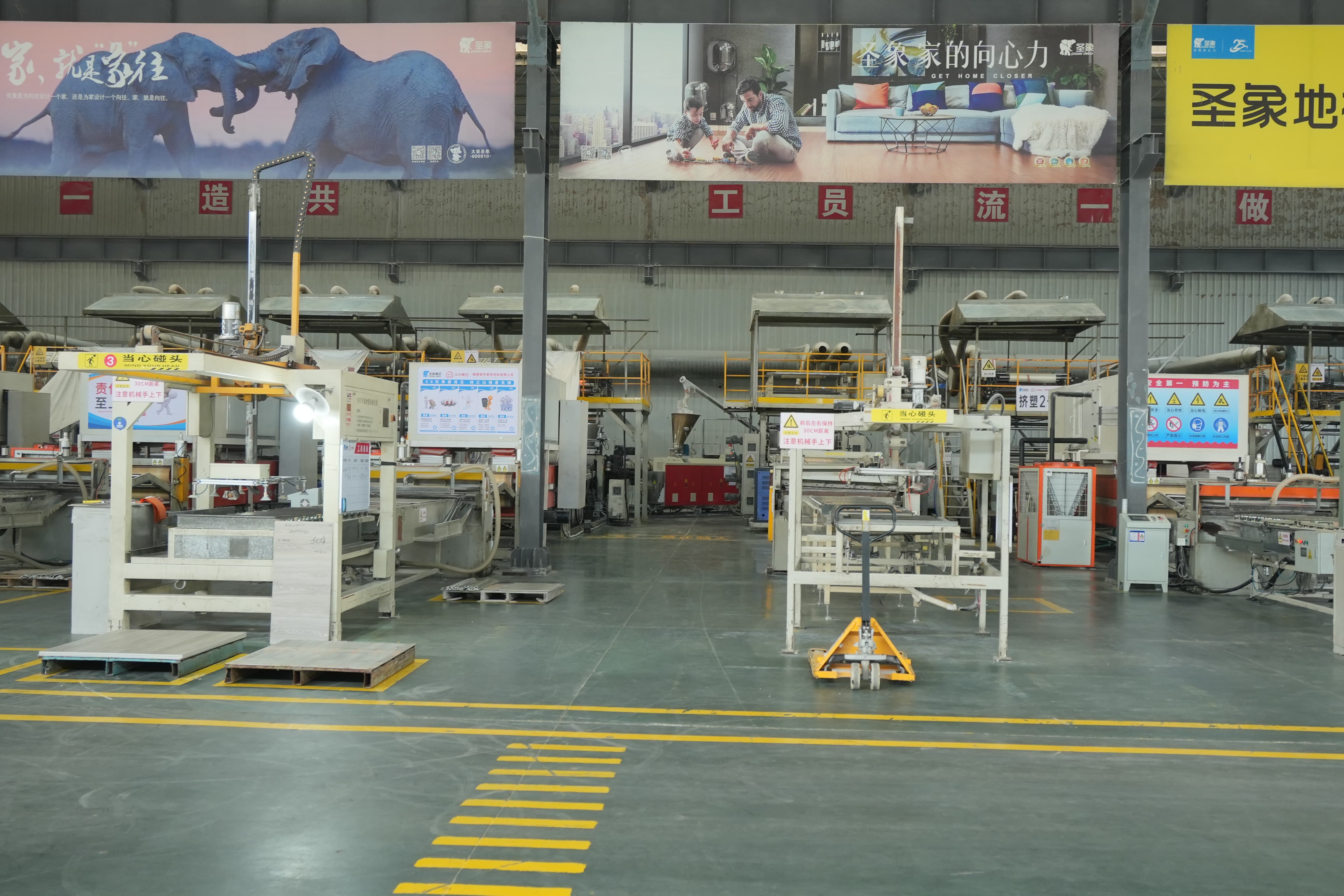
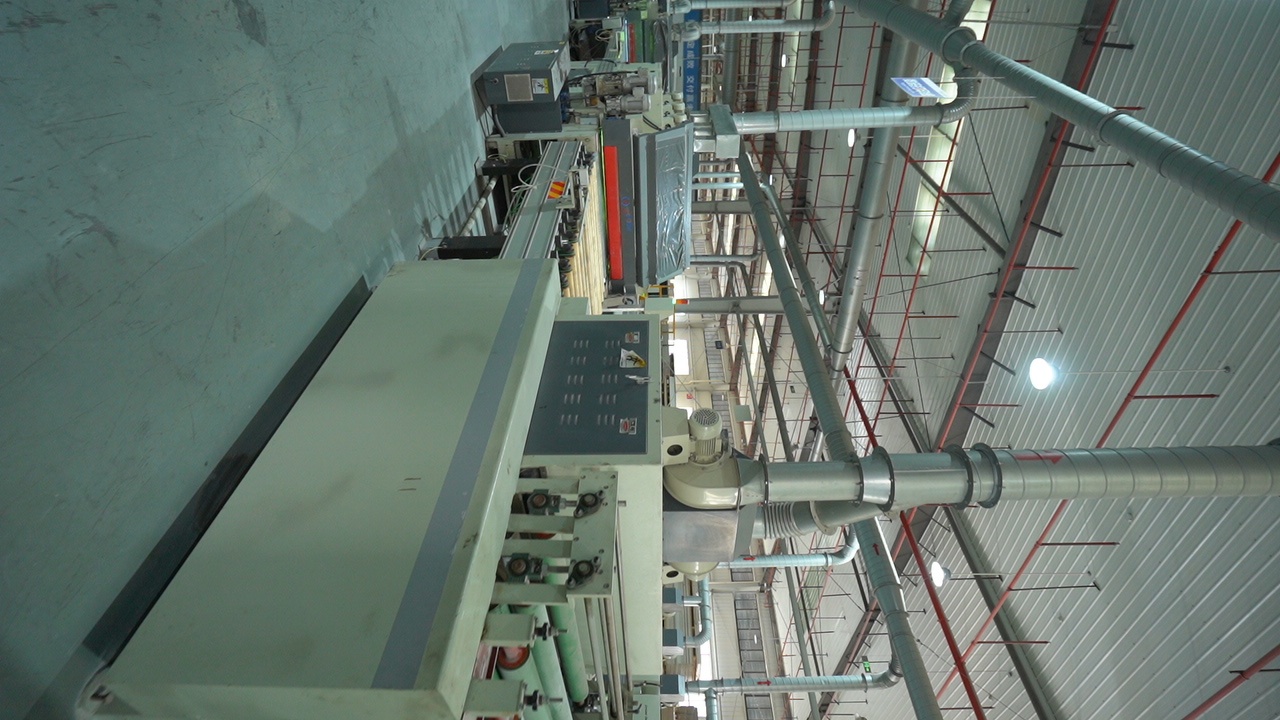
Power Dekor Group is a floor covering and wall panel manufacturer founded in 1995, with an 870,000 m² production site, more than 20,000 employees, 495 engineers and 88,000,000 m² of annual output, supplying mainly the EU and USA markets. Its silica mineral panel, model 8804, carries the compliance data used in this comparison; the SPC range uses the same installation logic with a different fire profile.
Installation speed: one day, and what that covers
The core difference between decorative wall panels and tile is quick installation, especially in renovation. For bathroom renovation, SPC wall panels or silica mineral wall panels can be completed in one day. That figure describes the wall scope: layout, cutting, adhesive fixing, locking, trimming and sealing. It does not describe a mechanical rebuild in which plumbing, floor build-up or damaged substrate is replaced; those items sit outside the panel scope and should be scheduled separately when a contractor quotes a one-day handover.
Three conditions decide whether the day holds. The wall must be flat and sound before installation begins. The layout must be drawn and pre-fitted before adhesive is opened. And all cutting and socket drilling must be finished before panels go up, because the sequence does not allow a second pass once the panels are fixed.
Labor: where the saving comes from
Labor cost savings compared with tile are a documented characteristic of the panel system, not a promise about a specific project. The mechanism is visible in the work breakdown: a panel wall is installed with structural adhesive and a locking system, so the site loses the adhesive bedding, grouting and curing stages that tile work requires, and a one-day completion removes the return visits that normally stretch a bathroom programme. The amount saved is project-specific, because demolition, access, substrate levelling and local trade rates all move it, so the comparison should be priced from the actual scope rather than assumed from a rate card.
Water and moisture: 100% waterproof and 0.06% movement
Model 8804 is documented as 100% waterproof, and its measured moisture movement is 0.06%. Moisture movement describes how much a panel changes dimension as its moisture content changes; a low value is the property that keeps joints and sealed edges stable in a room that sees steam every day. The panel is only half of the waterproofing story. In wet areas metal trims are not used, and every joint, including panel to panel, panel to ceiling and panel to floor, is sealed with silicone for water insulation. That detail belongs in the installation specification, not in the fitter's judgement.
Fire: A2-s1,d0 against SPC's B-s3,d0
Silica mineral wall panels meet EN 13501-1 Class A2-s1,d0, and the panel contains no plastic. SPC decorative wall panels meet Class B and are classified B-s3,d0 in this comparison. The practical consequence is a specification consequence rather than a verdict on either product: a project that calls for A2-s1,d0 cannot be satisfied with SPC, while a project that accepts Class B can be met by either panel type on fire grounds alone. For hotels, public bathrooms and any building with a fire strategy, the class should be confirmed in writing against the exact product and thickness being supplied rather than against the product family.
Hygiene: what ISO 846:2019 adds
Antibacterial performance on model 8804 is assessed under ISO 846:2019, the standard laboratory method for evaluating the action of microorganisms on plastics. The value for a buyer is documentary: the test converts a hygiene claim into a report that can be filed with the project record and that names the method and the product tested. Where hygiene is a specified requirement, request the report for the exact product reference instead of accepting a general statement about the range.
Maintenance: less work, with one service item
Compared with tile, decorative wall panels require less maintenance work and are easy to clean. The mechanism is the joint: a tiled wall is a grid of grout lines, and grout is where bathroom cleaning time goes. A panel wall presents larger continuous surfaces with sealed joints, which is why the documented maintenance position is lower effort. The qualifier is that silicone joints in a wet area remain a service item and should be inspected on a maintenance schedule, as they would be in a tiled shower.
Production carbon: a comparative, not a whole-life, claim
Decorative wall panels have lower carbon emission during production than tile. That statement covers the manufacturing stage only. It is not a whole-life assessment, and a project that needs a carbon figure for a tender should ask for the calculation boundary, because cradle-to-gate, transport, installation waste and end-of-life are separate scopes that should not be mixed into one number.
Appearance: film, digital print and surface formats
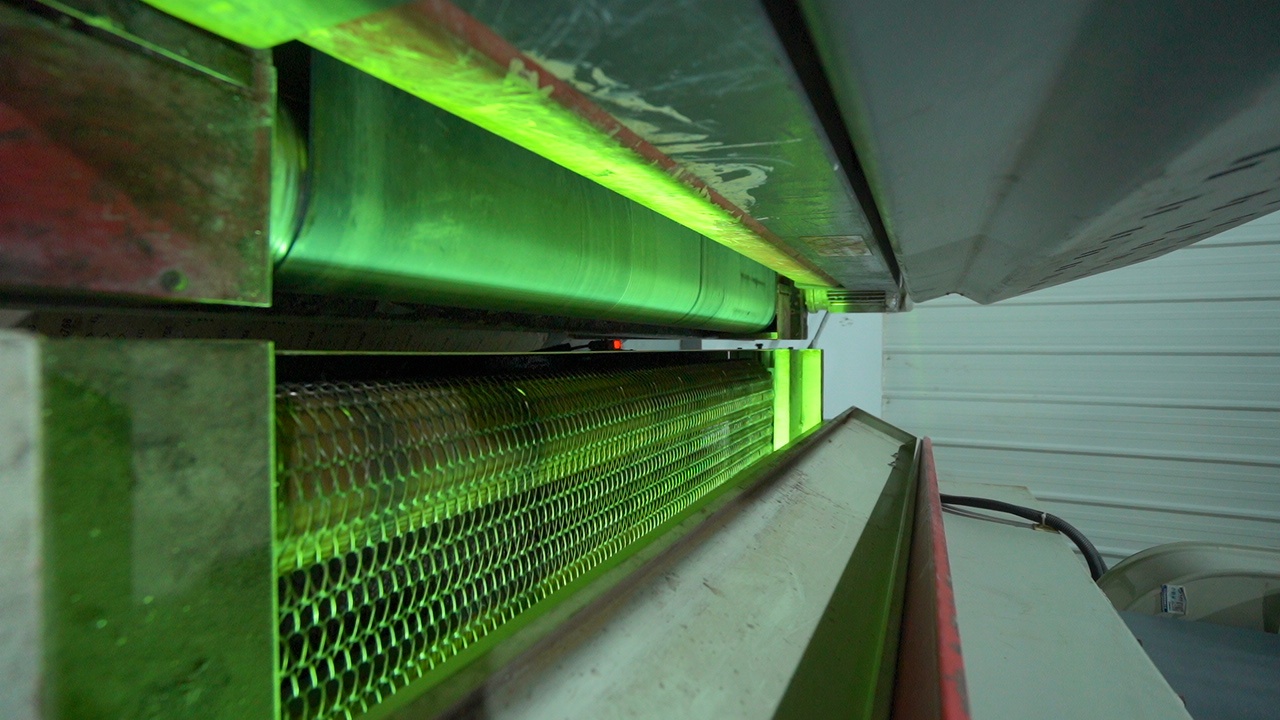
Design flexibility separates the panel route from tile more than performance does. Film-faced panels are limited by the size of the film and are the cheaper option where no specific pattern count is required. Digital print panels can carry customised designs and a continuous pattern across up to ten panels, which is what makes a stone or concrete effect read as one surface rather than a visible repeat. The category also covers 3D and stone-effect surface formats, so the appearance question can usually be answered without changing the performance specification.
Installation sequence: what a one-day bathroom involves
The published method is a gluing system with a locking joint. Read as a programme, it is six stages.
- Set out and pre-fit. Use a laser level to divide the wall into blocks matching the panel size and mark the layout in pencil. Pre-fit unglued panels in the installation area to confirm the calculation before any adhesive is applied.
- Cut the edge blocks. A table saw or handsaw with a diamond blade cuts the outermost blocks to size, decorative face up. All cutting and drilling is completed before adhesive.
- Drill for sockets and switches. Mark the positions on the panel and cut them with a diamond-grit drill or jigsaw to the marked sizes.
- Apply structural adhesive and hang. Adhesive is applied uniformly to the back of the panel. The first panel is aligned to the marked lines from the bottom and checked vertically, then the remaining panels are installed through the locking system.
- Check alignment every four to five panels. Confirm horizontal and vertical level with the laser before continuing, and press the panel surface in all directions to remove air pockets and improve adhesion.
- Detail corners and wet joints. At internal and external corners, metal trims are assembled without gluing or nailing. In wet bathroom areas metal trims are not used; all joints are sealed with silicone for water insulation.
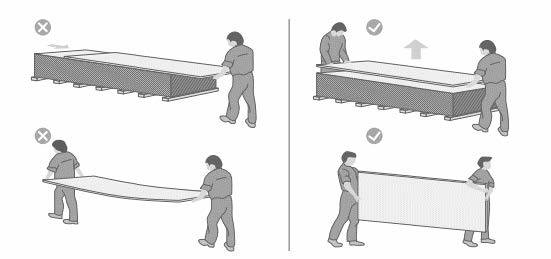
Two conditions decide whether the sequence fits inside a day: the substrate must be flat before installation starts, and panels must be handled carefully, particularly at the edges, because the edge is the fragile part of the product. Both are pre-start checks rather than installation problems.
Where each option fits
Occupied-home bathroom refresh. The wall scope completes in one day, which keeps water isolation, access disruption and the client's displacement to a minimum compared with a tiled programme. Silica mineral is the specification-safe choice where fire class or hygiene evidence is on the project file.
Rental, student and hospitality turnover. The same one-day logic applies, and SPC becomes relevant where the specification accepts Class B and budget is the binding constraint. The published decision rule is straightforward: SPC where price matters for a private bathroom, silica mineral where the space is public and fire performance is required.
Commercial and public bathrooms with a fire strategy. A2-s1,d0 puts the silica mineral panel in a different specification bracket from SPC, so this is the case where the panel choice is decided by the certificate rather than by the finish.
Bathrooms where hygiene evidence is required. The ISO 846:2019 report on 8804 belongs in the submittal package alongside the fire classification and the moisture data.
Where tile remains the natural choice. A brief that calls for continuous tiled floor and wall surfaces, or a project whose substrate is already prepared for tiling and which faces no shutdown pressure, does not gain much from switching. The panel argument is strongest when time, labor and renovation disruption are the binding constraints.
Wholesale and distributor programmes. For a wholesale decorative wall panel line, the check is consistency across repeat orders: the same product reference, the same classification documents and the same trim and sealant package each time. A one-day installation method is only repeatable for a distributor if the supplied system is repeatable.
Tile, silica mineral and SPC compared
| Criterion | Ceramic or porcelain tile | Silica mineral panel (8804) | SPC decorative wall panel |
|---|---|---|---|
| Wall-scope installation time | Reference option: adhesive bedding, grout and curing stages | Bathroom renovation can be completed in one day | Bathroom renovation can be completed in one day |
| Site labor | Reference option: multi-stage wet trade | Labor cost savings compared with tile | Labor cost savings compared with tile |
| Maintenance | Reference option: grout lines drive cleaning time | Less maintenance work; easy to clean | Less maintenance work; easy to clean |
| Production carbon | Reference option | Lower carbon emission during production than tile | Lower carbon emission during production than tile |
| Fire class (EN 13501-1) | Product-specific; not asserted in this guide | A2-s1,d0 | B-s3,d0 |
| Water and moisture evidence | Product-specific; not asserted in this guide | 100% waterproof; 0.06% moisture movement | Specified for humid, wet interior conditions |
| Antibacterial evidence | Product-specific; not asserted in this guide | Tested under ISO 846:2019 | Product-specific; not asserted in this guide |
| Typical fit | Prepared substrates; no shutdown pressure | Public and commercial bathrooms with fire and hygiene requirements | Private bathrooms and cost-led projects that accept Class B |
A pre-order checklist for specifiers and contractors
- Define the scope in one sentence. Wall panels only, or wall plus floor, plumbing and substrate repair. The one-day figure refers to the wall scope and should be quoted that way.
- Confirm the required fire class. Match the project specification against the classification for the exact product and thickness, not the product family.
- Request the moisture documents. The waterproof statement and the moisture movement value should be on paper before the order.
- Request the ISO 846:2019 report if hygiene is specified. File it with the fire certificate in the submittal package.
- Agree who levels the substrate. Flatness is an installation precondition; if levelling sits outside the panel scope, it still has to sit inside the programme.
- Confirm the matched equipment list. Sealant and edge trim profiles are part of the system and should be supplied together with the panels.
- Pre-fit a sample. Check edge handling, cutting behaviour with a diamond blade and the joint line before committing the order.
- Fix the commercial terms in writing. Product reference, quantity, surface design (film or digital print), packing and delivery schedule, plus who installs and who seals the wet joints.
FAQ
Does a silica mineral wall panel meet the fire class a bathroom project needs?
Silica mineral wall panels meet EN 13501-1 Class A2-s1,d0, and Power Dekor's model 8804 is specified to that class. SPC decorative wall panels meet Class B and are classified B-s3,d0. A2-s1,d0 means limited combustibility with the lowest smoke production class and no flaming droplets; B-s3,d0 sits lower on the same scale with a higher smoke class. Confirm the class required by the project specification, then match it against the certificate for the exact product and thickness, because a family-level statement is not a specification document.
How is the antibacterial performance of model 8804 verified?
It is assessed under ISO 846:2019, the standard laboratory method for evaluating the action of microorganisms on plastics. The output is a test report that names the product reference and the organisms tested. A buyer specifying hygiene should request that report and file it with the fire and moisture documents, since a general statement about a product range does not identify which product was tested or under which method.
Can a bathroom wall really be finished in one day instead of tiling?
For bathroom renovation, SPC wall panels or silica mineral wall panels can be completed in one day. That covers the wall panel scope: layout, cutting, adhesive fixing, locking, trimming and silicone sealing at wet joints. It depends on a flat substrate, a pre-planned layout and all cutting completed before adhesive. It does not include replacing plumbing, floor build-up or damaged substrate, which should be scheduled before the panel day if they are in scope.
Chinese silica mineral decorative wall panel manufacturers versus stone panel suppliers: how should a buyer compare them?
Compare the offer rather than the category label. Six items decide it: the EN 13501-1 classification for the exact product, waterproof and moisture data, hygiene test reports where relevant, the installation system, the trim and sealant package, and the supplier's production and delivery capability. Power Dekor Group manufactures wall panels with an 870,000 m² production site, 88,000,000 m² annual output and 495 engineers, and supplies mainly the EU and USA. If a stone panel supplier cannot provide product-specific test evidence, the two offers are not comparable on compliance, whatever the price difference.
Where do the labor cost savings over tile come from?
From the work breakdown, not from a lower hourly rate. A tiled wall needs adhesive bedding, setting, grouting and curing with return visits; a panel wall is installed with structural adhesive and a locking system and can be completed in one day. Fewer site days, fewer visits and less protection of the surrounding room are the cost drivers. The actual saving is project-specific, because demolition, access and substrate levelling can offset part of the difference, so price it from the scope.
How should a buyer validate a panel before a full order, and what affects delivery?
Start with a sample and a pre-fit: check the edge, the cutting behaviour with a diamond blade, the joint line and the silicone detail in a wet corner. In parallel, collect the document set, including fire classification, waterproof and moisture data, the ISO 846:2019 report where hygiene is specified, and the trim and sealant specification. Delivery depends on order volume, surface design (film or digital print) and production scheduling, so confirm the schedule in writing with the order instead of assuming a standard lead time. The product brochure is the quickest way to start that check.
Conclusion
The tile-versus-panel decision is settled by the constraint that binds the project. Where the bathroom has to come back into service quickly, the documented position is that SPC or silica mineral wall panels can complete the renovation in one day, with labor cost savings, less maintenance work and lower production carbon than tile. Where the wall lining sits inside a fire strategy or a hygiene specification, the panel choice narrows to silica mineral: model 8804 carries EN 13501-1 Class A2-s1,d0, 100% waterproof performance, 0.06% moisture movement and antibacterial testing under ISO 846:2019, while SPC stops at B-s3,d0.
What should not be simplified is the scope. A one-day wall installation still depends on a flat substrate, a planned layout and correct silicone detailing in wet areas, and it does not replace plumbing, flooring or substrate repair. Priced and specified that way, the comparison stays honest: tile remains a valid choice where time is not the constraint, and the panel system is the option that takes the wet trade off the critical path.
Next step. Power Dekor Group publishes its panel documentation at powerdekorgroup.com. For samples, specification files or wholesale quantities, download the panel brochure here: Power Dekor panel brochure (PDF), or contact the team at lunasun@powerdekorgroup.com or +86 18817368868.
Have Questions or Need More Details?
Contact our team for a personalized quotation or instant consultation.
Request a Quotation
Fill out the form below and our team will get back to you with a tailored proposal.
WhatsApp Direct Chat
Prefer to chat in real-time? Message us on WhatsApp for instant assistance & quick answers.
- Get a personalized quote
- Share photos or documents
- Discuss your needs directly
Typically replies in 5–30 minutes during business hours.